ज़्यादातर लोग LPG सिलेंडर और stove पर ध्यान देते हैं,
लेकिन असल control जिस चीज़ के हाथ में होता है,
वो है — LPG Regulator.
Regulator ही तय करता है कि:
👉 सिलेंडर से कितनी गैस निकले
👉 कितने pressure में निकले
👉 और emergency में गैस रुके या नहीं
इसीलिए regulator LPG system का सबसे important safety part है।
इस पोस्ट में आप जानेंगे:
• LPG regulator क्या होता है
• कितने type के होते हैं
• domestic और commercial regulators में फर्क
• कौन सा regulator कहाँ use होता है
• और safety से जुड़ी बातें
✅ LPG Regulator क्या होता है?
LPG cylinder के अंदर गैस बहुत high pressure में होती है।
Stove को इतनी high pressure गैस सीधे नहीं दी जा सकती।
👉 Regulator का काम है:
• high pressure को low करना
• flow stable रखना
• leakage और over-pressure से बचाना
• on/off control देना
यानि regulator बिना LPG system अधूरा है।
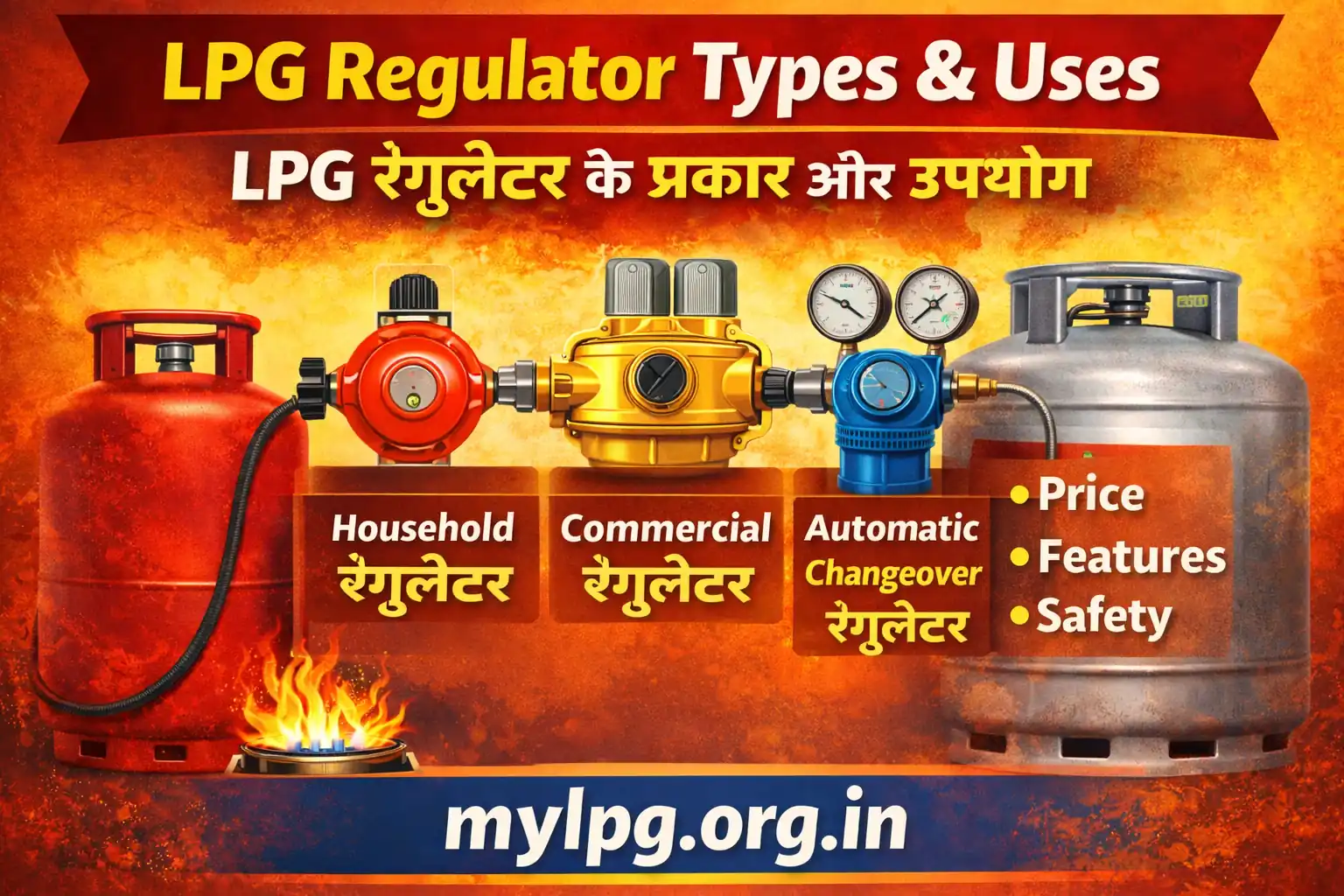
⚙️ LPG Regulator कितने प्रकार के होते हैं?
LPG regulators को तीन main category में समझ सकते हैं:
1️⃣ Domestic LPG regulators
2️⃣ Commercial LPG regulators
3️⃣ High-pressure / industrial regulators
🏠 1. Domestic LPG Regulator (घर वाला)
ये सबसे common regulator है।
🔹 पहचान
• छोटा
• हल्का
• usually grey / black
• clip-on type
• single outlet
🔹 कहाँ use होता है?
• घर
• flats
• rented rooms
• small kitchens
🔹 काम
• cylinder pressure low करता है
• stove तक smooth gas देता है
• emergency में manual on/off
👉 यही regulator आपके kitchen में लगा होता है।
🏪 2. Commercial LPG Regulator
ये heavy-duty होता है।
🔹 पहचान
• बड़ा body size
• metal construction
• threaded fitting
• high flow capacity
• multi-burner support
🔹 कहाँ use होता है?
• होटल
• ढाबा
• बेकरी
• कैंटीन
• catering setup
🔹 काम
• ज़्यादा गैस flow handle करना
• continuous use support
• stable flame for big burners
Commercial regulator domestic से काफी strong होता है।
🏭 3. High-Pressure / Industrial Regulator
ये special purpose regulators होते हैं।
🔹 पहचान
• pressure gauge लगा होता है
• adjustable knob
• very strong build
• sometimes double-stage system
🔹 कहाँ use होते हैं?
• industries
• LPG gas bank
• furnaces
• cutting/welding
• bulk kitchens
🔹 काम
• specific pressure maintain
• machinery safety
• controlled gas distribution
ये normal kitchen regulators नहीं होते।
⚖️ Domestic vs Commercial Regulator – फर्क
| Point | Domestic | Commercial |
|---|---|---|
| Gas flow | कम | बहुत ज़्यादा |
| Build | light | heavy-duty |
| Use | घर | business |
| Safety system | basic | advanced |
| Price | कम | ज़्यादा |
| Installation | simple | professional |
🛡️ Regulator safety क्यों important है?
क्योंकि LPG accidents में अक्सर culprit होता है:
• faulty regulator
• wrong type regulator
• loose fitting
• cheap duplicate product
Regulator खराब हो तो:
👉 leakage
👉 flame fluctuation
👉 sudden gas burst
👉 blast risk
सब बढ़ जाता है।
⚠️ Regulator से जुड़ी जरूरी बातें
✔️ हमेशा ISI certified regulator use करें
✔️ domestic में commercial regulator न लगाएँ
✔️ गिरा हुआ regulator reuse न करें
✔️ flame weak हो तो regulator check करें
✔️ regulator पर grease / oil न लगाएँ
✔️ 5 साल बाद change कराना safe माना जाता है
🧠 कैसे पहचानें regulator खराब है?
• stove अपने आप बुझता है
• gas smell near regulator
• flame बहुत low रहती है
• knob loose लगता है
• cylinder लगाने में problem आती है
इन signs में regulator replace करना better है।
💬 Ground reality (personal touch)
बहुत लोग pipe बदल देते हैं, stove बदल देते हैं,
लेकिन regulator सालों-साल वही चलता रहता है।
जबकि LPG system में सबसे ज़्यादा pressure
👉 regulator ही झेलता है।
इसलिए regulator को “small part” समझना
सबसे बड़ी mistake होती है।
📌 निष्कर्ष
LPG regulator कोई simple switch नहीं,
ये पूरा pressure-control safety device है।
Domestic, commercial और industrial regulators
अलग-अलग purpose के लिए बने होते हैं।
गलत regulator लगाना
👉 illegal भी हो सकता है
👉 और dangerous भी।
सही regulator = safe kitchen.
❓ FAQs – LPG Regulator Types & Uses
Cylinder pressure कम करके safe gas supply देना।
नहीं, pressure mismatch और safety risk होता है।
आमतौर पर 5 साल के बाद change करना safe माना जाता है।
Weak flame और gas smell।
Quality और pressure safety के लिए।
Read ALso:Ladaki Bahin Form Kaise Bhare – 2026 Real Ground Guide
Read Also: LPG Gas Guide India – Price, Booking, Subsidy, Safety (Complete Portal)